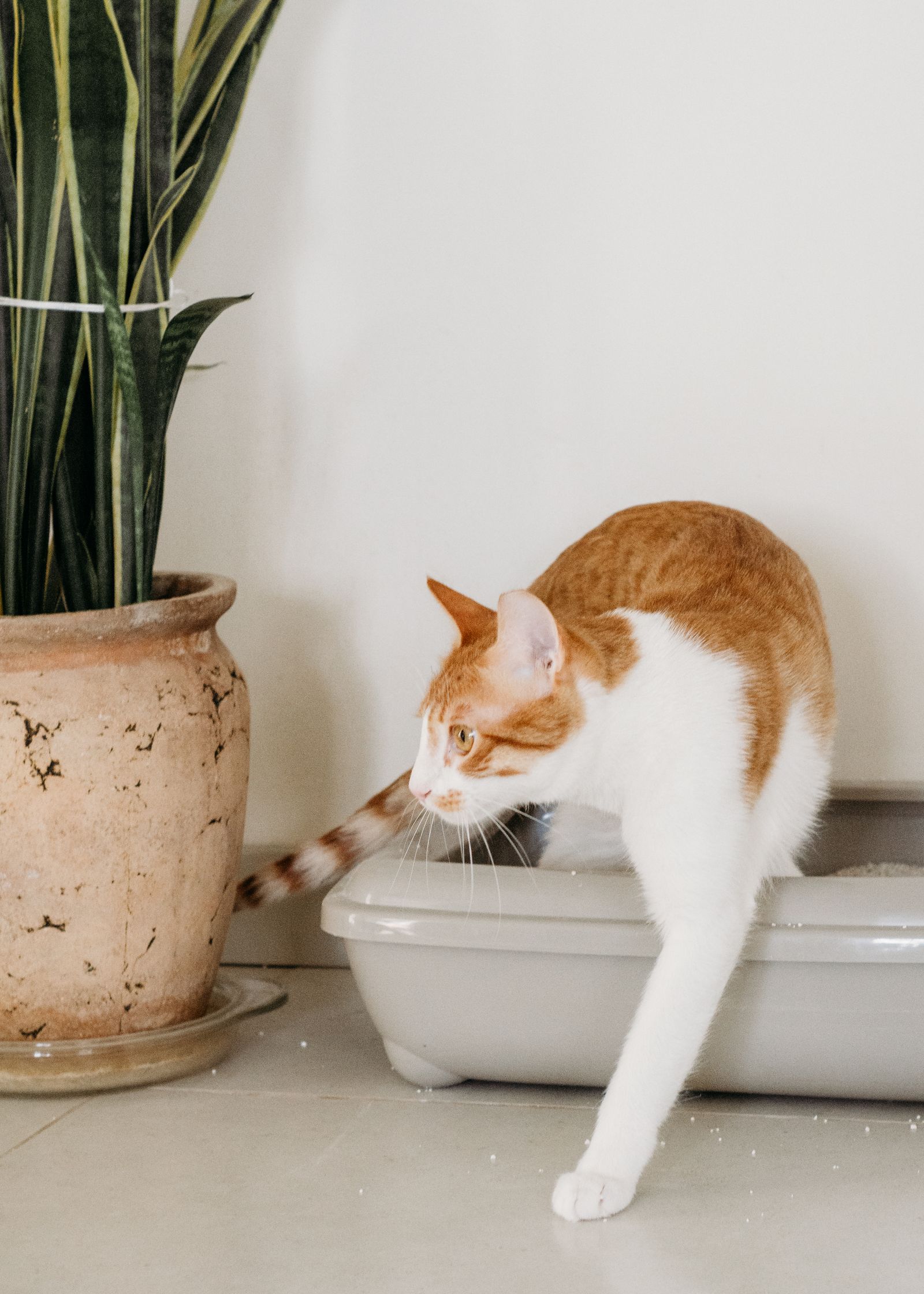

The standard advice — one litter box per cat, plus one — is good advice, and it is also the part people implement while missing the reason behind it. Four boxes lined up along one wall in the laundry room is technically n+1 for three cats. As far as the cats are concerned, it is one location, and it will not solve much.
Why the spare box exists
The extra box is not about capacity. It is about choice. In a multi-cat home there is always a chance that a box is occupied, has just been used, or is being quietly guarded by whichever cat currently considers that corridor theirs. The spare guarantees an acceptable option at any moment.
Spread them out
Boxes in different rooms, ideally on different floors, are what actually create independent options. The test is whether a cat can reach a box without walking past another cat that intimidates them. If the answer is no, that box does not count for that cat.
This is the single most common fix in homes where one cat keeps having accidents while the others are fine. The cat is not being difficult — it is being blocked, often so subtly that the owner never sees it.
Resource guarding is quiet
People expect conflict between cats to look like fighting. Far more often it looks like nothing at all: a cat sitting in a doorway, a long stare, a body positioned in a corridor. To the cat on the receiving end, that is a closed door.
Watch which cat sits where when another approaches a box. Watch whether a cat waits, turns around, or takes a longer route. Those are the signals that tell you your layout is not working, and they show up well before an accident does.
Avoid dead ends
A box in a cupboard, a small bathroom with the door usually shut, or a corner with one way in and out gives a cat no exit if another cat appears. Cats are ambush predators and they know they are also prey; being cornered mid-elimination is genuinely stressful. Open placement with clear sightlines is better, even though it is less convenient for us.
Size and depth still apply
Everything that matters in a single-cat home matters more here. Boxes should be about one and a half times body length, litter around 5–7 cm deep, and unscented. And scooping frequency needs to scale — two cats sharing boxes means at least twice a day.
Do not force sharing of anything else either
The same logic applies across the household. Separate food bowls at a distance from each other, multiple water sources, and enough elevated resting spots that no cat has to contest one. Vertical space is genuinely useful: cat trees and shelves let cats occupy the same room while keeping the distance they want.
Get that cat checked by a vet before rearranging furniture. In multi-cat homes it is easy to attribute everything to social dynamics and miss a urinary problem in one individual. It is also worth confirming which cat is actually responsible — owners are wrong about this more often than you would think, and a period of separate observation settles it quickly.
The short version
Count boxes as n+1. Then count locations, not boxes, and make sure every cat can reach one without a confrontation. Scoop daily, more if you can. Most multi-cat litter problems are geography problems.