
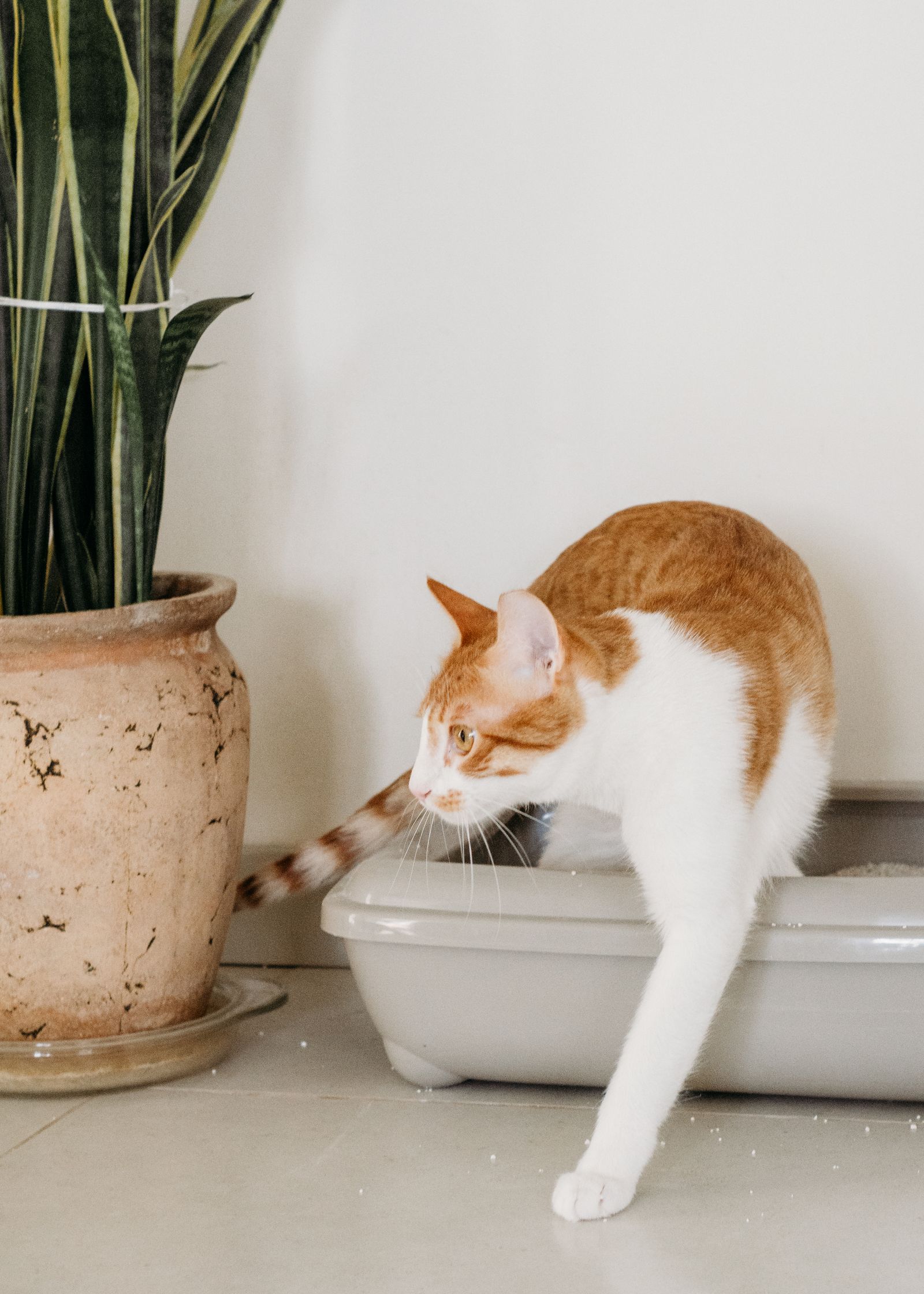
Almost every cat owner has asked this at some point, usually while standing over a box wondering whether it can wait one more day. The honest answer is that there are three different jobs here, on three different clocks, and mixing them up is what makes litter feel like more work than it is.
Scoop every day, without exception
This is the one that matters most. Solid waste and clumps should come out at least once a day — twice if you have more than one cat sharing the box. Cats are fastidious animals, and a box that has been sitting for two days is one of the most common reasons a cat starts going somewhere else in the house.
Daily scooping also happens to be the cheapest thing you can do. Every clump you remove promptly is one that has not had time to break apart and contaminate the litter around it, which means the litter you leave behind lasts noticeably longer.
Top up weekly — but do not just keep adding
Every scoop takes a little clean litter with it. Once a week, bring the depth back up to roughly 5–7 cm. That depth matters more than people expect: too shallow and clumps stick to the bottom of the box, too deep and many cats simply refuse to dig.
What topping up cannot do is refresh litter that has gone stale. If you find yourself adding more and more to mask an odour, the litter underneath is already saturated and it is time for a full change instead.
Full change: it depends on the litter
Clumping litter — tofu, tapioca or bentonite — is designed so that waste leaves with the clump. If you scoop daily and top up weekly, a full change every three to four weeks is usually right for a single cat.
Non-clumping litter absorbs urine into the whole bed rather than isolating it. There is no way to remove the wet portion, so the entire box needs emptying roughly once a week.
With plant-based litters like tofu, there is a second consideration: because the pellets break down rather than staying inert, a box left far too long will start to soften and compact at the bottom. Sticking to the monthly reset avoids that entirely.
Wash the box itself, not just the litter
When you do a full change, wash the empty box with warm water and unscented dish soap. Two things to avoid: bleach residue, and anything ammonia-based. Ammonia is one of the compounds in cat urine, so an ammonia cleaner effectively tells your cat this is a spot that has already been marked.
Plastic boxes scratch over time, and those scratches hold odour no matter how well you clean them. If a box still smells after a proper wash, replace it — usually every year or so.
The signs you have waited too long
- Your cat perches on the rimTrying to use the box without standing in it is one of the clearest complaints a cat can make.
- They dig briefly, then leaveAn interrupted routine usually means the box failed their inspection.
- You smell it from the doorwayIf you can smell it standing up, it is considerably stronger at cat height.
- Going right beside the boxOften not defiance — it can be a cat that wants to use the spot but not the box in its current state.
If your cat suddenly stops using a box that is clean and unchanged, treat it as a health question before a housekeeping one. Urinary tract infections, crystals, kidney disease and arthritis all show up this way, and some of them are emergencies. Call your vet first — especially if you see straining, blood, or a male cat producing nothing at all.
A schedule that actually holds
Daily: scoop. Weekly: top up to depth. Monthly: empty, wash, refill. That is the whole system. Most people who find litter overwhelming are trying to do the monthly job weekly and skipping the daily one — which is exactly backwards, because the daily scoop is what makes everything else easy.